

Rubber Track Fitment & Pattern Guide
Measure. Match. Choose the Right Rubber Track.
Find the right rubber track by confirming Width × Pitch × Links / Drive Lugs, identifying the undercarriage style, and then choosing a tread pattern offered for that exact fitment. Questions? Call 800-966-6640.
Start Here: The 3 Numbers You Need
1Width (mm) - total track width across the tread, edge to edge.
2Pitch (mm) - center-to-center distance between consecutive inner drive points.
3Links / Drive Lugs (#) - total count around the inside of the track.
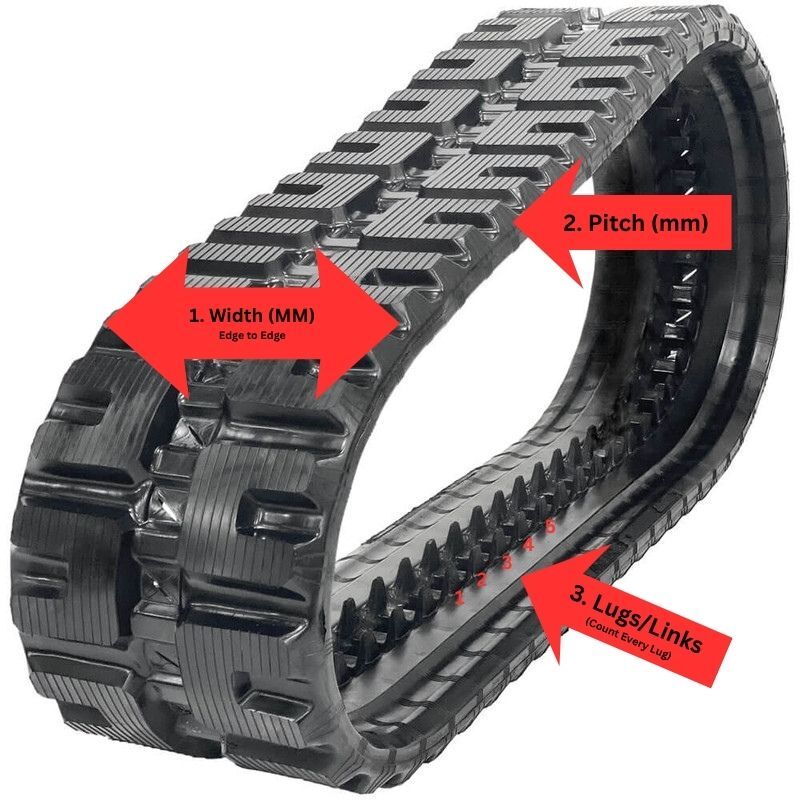
Fitment shortcut: If your current track still has a molded size, copy it exactly. If not, measure width and pitch in millimeters and count every link or drive lug before ordering.
How to Read & Measure Rubber Track Size
1) Width (W)
Measure the overall track width from one outside tread edge to the other in millimeters.
2) Pitch (P)
Measure center-to-center between two consecutive inner drive points. On steel-link tracks, use the steel inserts or drive links. On coreless tracks, use the molded rubber drive lugs.
3) Links / Drive Lugs (L)
Mark one starting point, then count every steel link or rubber drive lug around the full inside circumference of the track.
UST Tip: Many tracks have the size stamped or molded on the inner surface. Clean the rubber and look for a marking such as 450x86x52. Copy the complete marking before ordering.
Find Your Machine
Browse current UST rubber track listings by machine type, brand, and model. Start with the machine family below, then confirm the exact track size and undercarriage details before ordering.
Important: Finding your model gets you to the correct machine family, but exact fitment can still vary by serial number, undercarriage style, width, pitch, link or drive-lug count, and other machine-specific details. Always verify the individual product fitment before ordering.
Looking for a specific model? Expand the machine type and brand below, or jump directly to UST Equipment Search.
Search by MachineTrack Loaders (CTL + Mini Track Loaders)353 models
ASV35 models
Barreto10 models
Baumalight2 models
Bobcat28 models
Boxer11 models
CASE18 models
Caterpillar50 models
Cormidi2 models
Derette4 models
Ditch Witch15 models
Gehl15 models
JCB11 models
John Deere16 models
Komatsu9 models
Kubota15 models
Machpro2 models
Manitou4 models
Mustang7 models
New Holland16 models
Rayco4 models
Takeuchi20 models
Terex9 models
Toro Dingo21 models
Vermeer12 models
Volvo6 models
Wacker Neuson7 models
Yanmar4 models
Mini Excavators300 models
Airman24 models
Bobcat47 models
CASE21 models
Caterpillar43 models
Daewoo11 models
Ditch Witch1 model
Doosan13 models
Gehl3 models
Hitachi5 models
JCB2 models
John Deere16 models
Kobelco5 models
Komatsu7 models
Kubota35 models
Mustang2 models
New Holland2 models
SANY5 models
Takeuchi27 models
Terex4 models
Vermeer2 models
Volvo14 models
Wacker Neuson3 models
Yanmar8 models
Other Tracked Machines68 models
Canycom2 models
CASE3 models
CAT6 models
Chikusui5 models
Ditch Witch8 models
Gehl2 models
Hitachi3 models
Huki1 model
IHI4 models
JCB3 models
Komatsu3 models
Kubota8 models
Morooka8 models
Prinoth Panther3 models
Rayco1 model
SCAIP1 model
Terramac1 model
Wacker Neuson5 models
Yanmar1 model
Agricultural Rubber Tracks44 models
AGCO3 models
CASE1 model
CAT9 models
John Deere31 models
Equipment Search remains the live shopping source for product availability. This embedded index is a catalog snapshot used to make the help guide easier to navigate.
Track Loaders: CTLs & Mini Track Loaders
Track-loader fitments in the current catalog span several pitch and link-count families. Do not assume that all 86 mm tracks share the same link count, or that every machine in a brand uses the same pitch.
86 mm Pitch Examples
Bobcat T590: 320x86x49 or 400x86x49.
Bobcat 864: 320x86x52, 400x86x52, or 450x86x52.
Bobcat T250: 450x86x55.
JCB 260T: current 450 mm examples use 450x86x56.
100 mm Pitch Examples
Takeuchi TL10, TL140, and TL240 examples use 450x100x48.
Takeuchi TL12, TL150, and TL250 examples use 450x100x50.
A 100 mm-pitch system indexes differently than an 86 mm-pitch system. Match the exact machine configuration rather than substituting by width.
Mini Track Loader Examples
Bobcat MT100 is represented with multiple 72 mm-pitch options, including 180, 230, and 250 mm widths depending on the exact track configuration.
Ditch Witch SK1050 examples include 180x72x44 and 230x72x44.
Ditch Witch SK1550 has a current S-Bar example at 265x72x52.
Why Drive Style Matters
The current Toro Dingo TX1000 listing illustrates why model name alone is not enough:
- Sprocket-driven: 150x86x67
- Bogey-driven wide: 250x88x37
- Bogey-driven narrow: a separate 88 mm-pitch configuration is also listed
Before ordering: identify the drive system first, then confirm width, pitch, and link / drive-lug count.
- Pitch and count are fitment dimensions: both must index correctly with the drive system.
- Width is not automatically interchangeable: verify the exact product fitment and machine clearance before changing width.
- Pattern comes last: compare only the tread patterns offered for the confirmed machine and size.
Mini Excavators
Mini-excavator tracks use the same basic Width × Pitch × Links format, but guide profile, roller / flange arrangement, and available tread patterns vary by model.
Current Catalog Size Examples
Bobcat E10: 180x72x39.
Bobcat E14: current listings include 180x72x41; an L-Lug listing uses 200x72x41.
Gehl Z17: 230x72x46.
These are fitment examples from current product listings, not universal mini-excavator sizes.
Mini-Excavator Fitment Checklist
- Confirm the exact machine model and variant.
- Verify width, pitch, and link count.
- Confirm roller / flange style.
- Verify the inner guide height and profile.
- Confirm adequate adjuster range for proper tension.
- Choose tread only after the fitment is confirmed.
Crawler Carriers, Dumpers, Pavers & Other Tracked Machines
The current catalog also includes crawler carriers, compact dumpers, directional-drilling machines, asphalt pavers, and other specialized tracked equipment. These machines can use very different drive systems and track constructions, so the exact model and track dimensions matter.
Crawler Carrier Example
Morooka MST1500 and several MST1500-family crawler listings use 700x100x98 Straight Bar tracks.
These crawler tracks use heavy-duty center drive components where the sprocket engages. Confirm model variations before ordering.
Asphalt Paver Example
Cat AP1055 family listings include track configurations such as 460x225x36 and 470x152.4x53.
Different track constructions can exist within the same machine family, so use the exact listing and dimension set.
Agricultural Rubber Tracks
Agricultural rubber tracks can use wider belts and larger pitch dimensions than compact construction equipment. Match the exact tractor / harvester family, width, pitch, and link count shown for the product.
John Deere 8000T Family Example
John Deere 8000T listings include:
457x152.4x54635x152.4x54762x152.4x54
Fitment rule stays the same: do not choose by width alone. The pitch, link count, drive system, and machine family must all agree with the replacement track.
Choosing a Rubber Track Tread Pattern
Fitment comes first. Once the machine, dimensions, and undercarriage are confirmed, compare only the patterns offered on the compatible product.
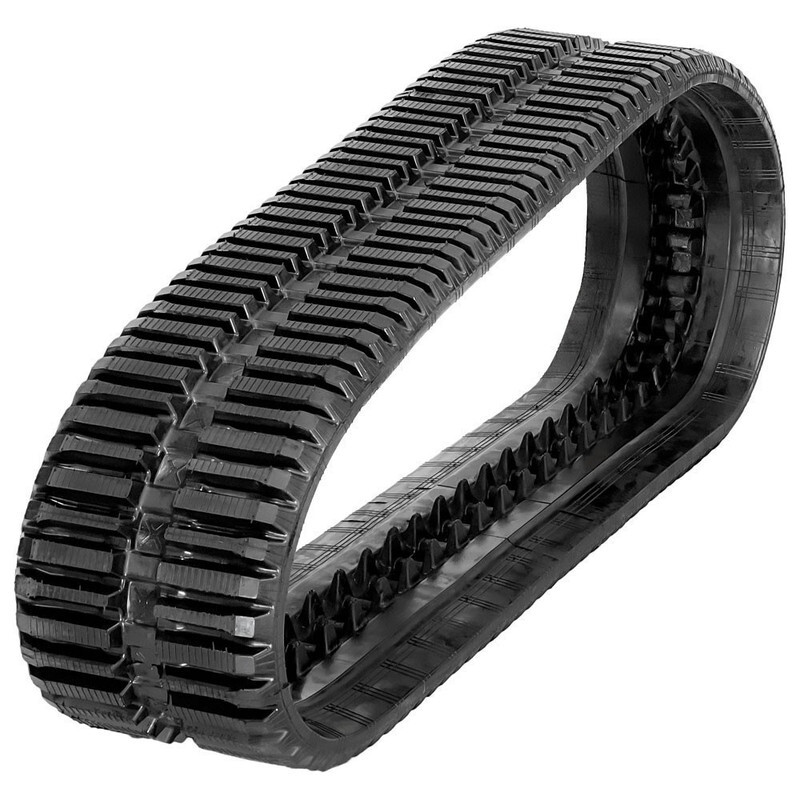
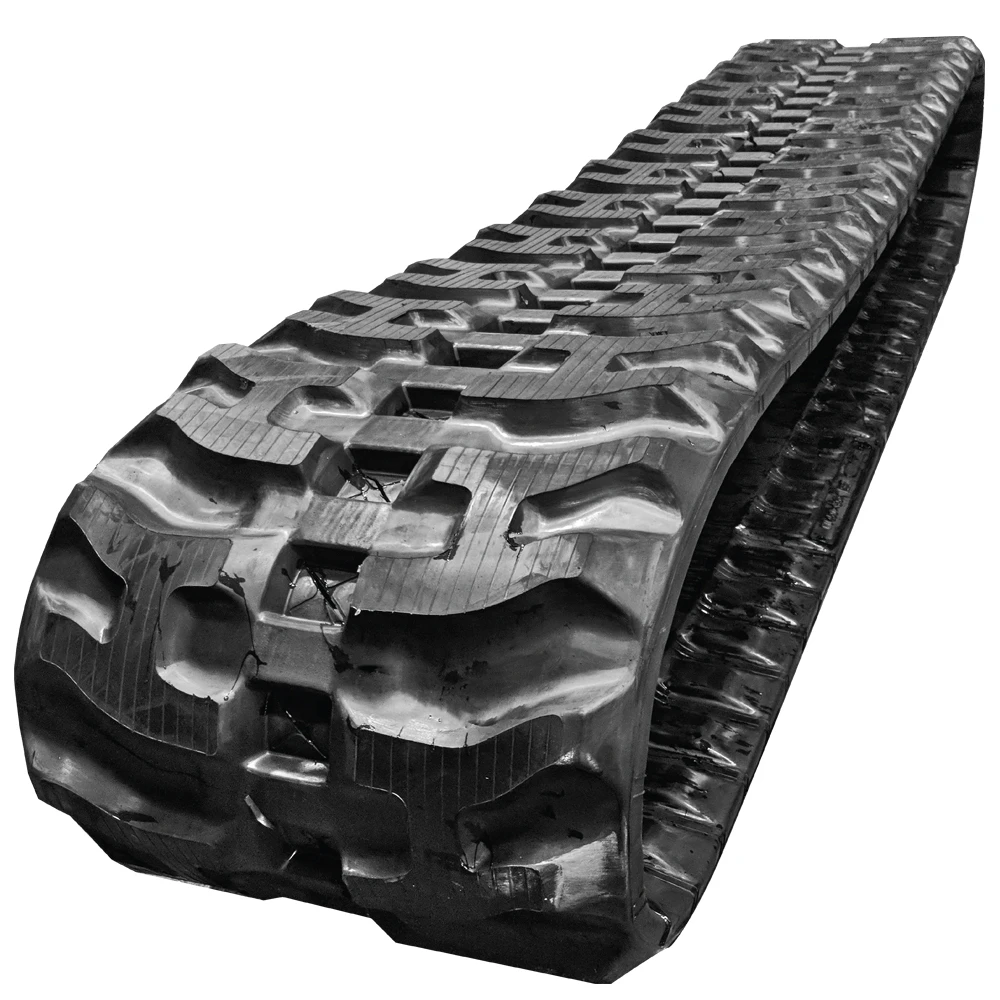
Pattern availability is part-number specific. The four images below use confirmed UST pattern imagery. Do not use a tread photo by itself to determine fitment.
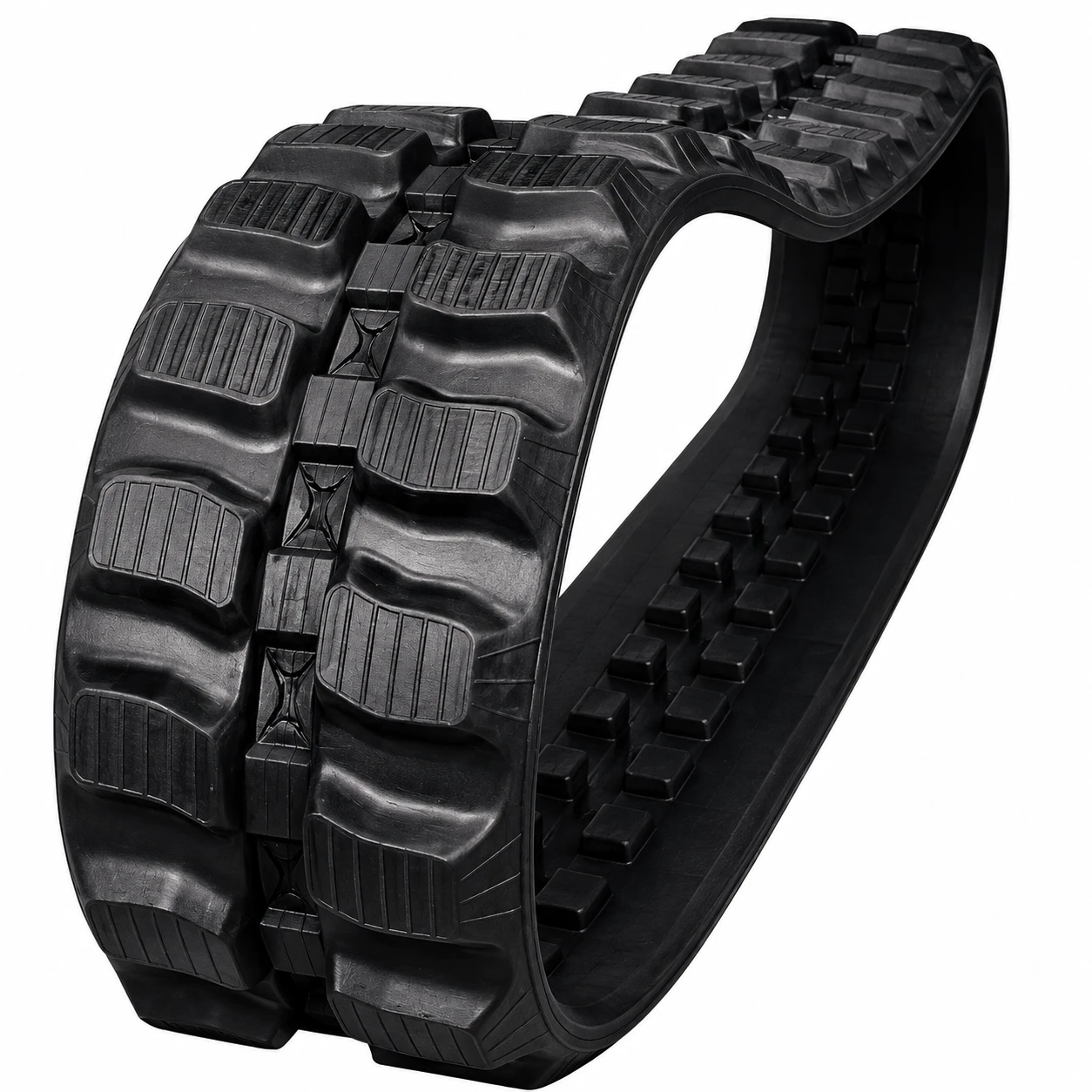
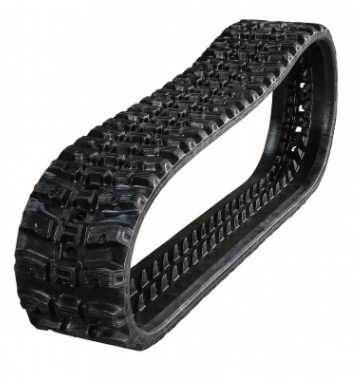
Pattern Families in the Current Catalog
| Pattern | Typical Use Guidance | Where It Appears in the Current Catalog |
|---|---|---|
| Bar / Multi-Bar | Large ground-contact area and stable footprint on firm, flatter surfaces. | Track Loaders |
| Block | General-purpose option for hardpack, dirt, gravel, and longer pavement runs. | Track Loaders, Mini Excavators, select Other Tracked Machines |
| C-Lug | Mixed terrain, grading, general site work, and combined on/off-road operation. | Track Loaders |
| Z-Lug | Higher-traction applications such as steep grades, snow, and ice. | Track Loaders |
| Turf | Lawns, landscaping, and applications where reducing ground disturbance is important. | Track Loaders, Mini Excavators, Other Tracked Machines |
| Split Bar | Bidirectional traction, shock absorption, and smoother travel over varied ground. | Track Loaders |
| Q-Tread | Multi-directional traction and good all-around grip when the machine changes direction frequently. | Track Loaders |
| S-Bar | Bidirectional wavy-bar design for strong traction in mud and snow where ground finish is secondary. | Track Loaders, Mini Excavators, Other Tracked Machines |
| T-Lug | Bidirectional staggered-block pattern for added traction, including slopes, snow, and ice. | Track Loaders, Mini Excavators, Other Tracked Machines |
| L-Lug | Directional straight-bar variant focused on traction, directional control, and self-cleaning. | Track Loaders, Mini Excavators, Other Tracked Machines |
| Wavy Block | Versatile general-purpose pattern with good hard-surface performance and broad terrain capability. | Track Loaders, Mini Excavators, select Other Tracked Machines |
| H-Wave | Balance of dependable grip, smoother operation, reduced vibration, and debris shedding. | Track Loaders |
| V-Lug | Directional straight-bar variant for traction, control, and self-cleaning where offered. | Track Loaders and select Other Tracked Machines |
| Straight Bar / Crawler Straight Bar | Heavy-duty crawler-carrier pattern for demanding off-road work and center-link drive systems. | Other Tracked Machines |
| Non-Marking Variants | Surface-sensitive and indoor work where reducing black rubber marks is important. | Track Loaders, Mini Excavators, Other Tracked Machines |
How to Be Sure Your New Track Matches
- Start with the exact machine model and use Equipment Search or the machine index above.
- Find the molded or stamped size on the inside of your current track and copy the complete marking.
- Measure and count if the marking is missing: width (mm), pitch (mm), and links / drive lugs.
- Verify the undercarriage: sprocket or drive style, roller / flange style, inner guide profile, and any serial-number or configuration notes.
- Confirm clearance before changing track width.
- Choose tread pattern only from the options offered for the confirmed fitment.
- Replace tracks in pairs when practical on CTLs and MTLs to help keep side-to-side wear more even.
Current-Catalog Fitment Examples
Examples below come from current storefront-visible product listings and are included to show how much fitment can vary. Always use the exact product page for the final fitment decision.
| Machine / Family | Current Example Size(s) | What It Demonstrates |
|---|---|---|
| Bobcat T590 | 320x86x49 / 400x86x49 | Same pitch and link count with multiple width options. |
| Bobcat 864 | 320x86x52 / 400x86x52 / 450x86x52 | 86 mm pitch does not mean 49 links; link count is machine-specific. |
| Takeuchi TL10 / TL140 / TL240 | 450x100x48 | 100 mm-pitch track-loader family. |
| Takeuchi TL12 / TL150 / TL250 | 450x100x50 | Same width and pitch family with a different link count. |
| Toro Dingo TX1000 | 150x86x67; 250x88x37; other 88 mm configuration | One model family can use different drive systems and dimensions. |
| Bobcat E10 | 180x72x39 | Mini-excavator example. |
| Gehl Z17 | 230x72x46 | Mini-excavator width and link-count variation. |
| Morooka MST1500 family | 700x100x98 | Heavy-duty crawler-carrier fitment. |
| Cat AP1055 family | 460x225x36 / 470x152.4x53 | Specialized tracked machines can have very different track constructions within one machine family. |
| John Deere 8000T | 457x152.4x54 / 635x152.4x54 / 762x152.4x54 | Agricultural track width options with shared pitch and link count. |
Rubber Track Fitment FAQ
What do the three numbers mean, such as 450x86x52?
They represent Width (mm) × Pitch (mm) × Links / Drive Lugs (count). Width is the overall track width, pitch is the center-to-center distance between consecutive inner drive points, and the final number is the total count around the track.
Where do I find my rubber track size?
Look for a stamped or molded size on the inside surface of the track. If it is unreadable, measure the width and pitch in millimeters and count the links or drive lugs around the track.
Does finding my machine in the catalog index guarantee every track shown will fit?
No. The machine index confirms that the model is represented in the current catalog, but fitment can still vary by serial number, undercarriage style, width, pitch, link / drive-lug count, and other machine-specific details. Verify the exact product fitment before ordering.
Will a wider track affect fitment?
Yes. A different width changes machine clearance and ground contact even when pitch and link count remain the same. Match the drive dimensions first and confirm frame, roller, and fender clearance before changing width.
Why can the same machine family use different track sizes?
Some machine families have multiple undercarriage styles, serial-number breaks, optional widths, or drive systems. The current Toro Dingo TX1000 listing, for example, includes both sprocket-driven and bogey-driven configurations, so the drive style must be identified before ordering.
Which tread pattern is best?
Choose only from patterns available for your confirmed fitment. C-Lug is a strong mixed-terrain choice; Block is a general-purpose hardpack and pavement option; Split Bar balances bidirectional traction and ride quality; Q-Tread provides multi-directional traction; Turf reduces ground disturbance; and Z-Lug is intended for demanding traction conditions such as steep grades, snow, and ice.
What are non-marking rubber tracks for?
Non-marking variants use a rubber compound intended to reduce black marks on finished surfaces. They are useful for indoor construction, warehouses, public venues, and other surface-sensitive applications when a compatible non-marking track is offered for the machine.
Should I replace both tracks at the same time?
On compact and mini track loaders, replacing tracks in pairs when practical can help keep side-to-side wear and traction more consistent.
Any installation or break-in tips?
Inspect sprockets, rollers, idlers, and related undercarriage components before installation. Set track tension according to the machine manual and re-check tension after initial use.
Need help confirming fitment?
Call 800-966-6640, use Equipment Search, or send our team photos of the inside of your track and any molded size markings.
Need Fitment Help?
Take a clear photo of the inner drive area and any stamped or molded size numbers, then contact our team. We can help verify pitch, link / drive-lug count, guide style, and the tread options available for your machine.
Product and machine names are used for fitment reference. Always confirm the exact replacement track specifications before ordering.
