United Skid Tracks

Rubber Track Fitment and Pattern Guide

Get the right rubber track the first time. Confirm Width × Pitch × Links so your new track matches what’s on your machine. Questions? Call 800-966-6640.

Start Here: The 3 Numbers You Need                                                       
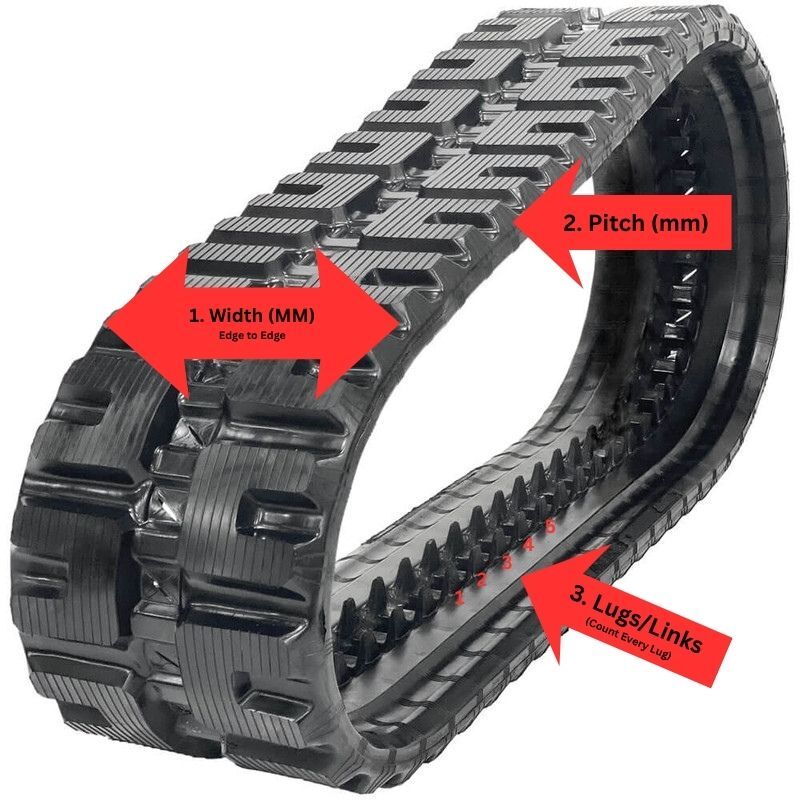
1Width (mm) — total track width across the tread, edge to edge.

2Pitch (mm) — center-to-center between inner drive lugs/links.

3Lugs/ Links (#) — total count of drive lugs/links around the track.

Pro tip: Look for a stamped or molded size on the inside of the track. If worn off, measure with a metric tape and count carefully (mark your starting lug).
 
Quick tools (optional)

Size builder (mm)

Your size will appear here…

Copies the formatted size to clipboard

mm ↔ inch

How to Read & Measure Track Size

1) Width (W)

Measure the overall track width edge-to-edge in millimeters.

Width (mm)

2) Pitch (P)

Distance from the center of one steel insert/drive lug to the center of the next, measured on the inside of the track.

Pitch (mm)

3) Lugs/ Links (L)

Count the total number of steel inserts/drive lugs inside the track—go all the way around.

Count all around = Lugs/ Links
Example size: 450 × 86 × 52
W
450 mm Wide
P
86 mm Pitch
L
52 Lugs/ Links

UST Tip: Many tracks have the size stamped or molded on the inner surface. Clean the rubber and look for a marking like 450x86x52.

Compact Track Loaders (CTL)

Most CTL tracks are sized in millimeters as Width × Pitch × Links. Example: 450×86×52.

Conventional Style (86 mm pitch)

  • 320 × 86 × 56
  • 400 × 86 × 56
  • 450 × 86 × 56

Choose width for stability/flotation; keep pitch & link count matched to your sprocket.

Takeuchi Style (100 mm pitch)

  • 320 × 100 × 52
  • 400 × 100 × 52
  • 450 × 100 × 52

Different pitch, different link count—verify your sprocket indexing before ordering.

Shop CTL Tracks Find by Equipment Tread pattern tips

Mini Excavators

Typical Mini-Ex Sizes

Widths ~180–400 mm. Pitches vary by model (e.g., 52.5, 72–75, 90–96 mm). Link counts vary with undercarriage length.

Format: Width × Pitch × Links — e.g., 300 × 52.5 × 86 or 230 × 96 × 33.

Mini-Ex Checklist

  • Confirm roller style (single vs. triple flange) & sprocket tooth profile.
  • Verify guide height/profile of inner lugs.
  • Select tread for digging traction vs. turf protection.
  • Leave adjuster range for proper tensioning.
Find by Equipment

Mini Track Loaders

Two common drive styles; identify yours first:

Heads-up: some models (e.g., Toro Dingo TX1000) come in both styles.

Shop by Brand/Model Find by Equipment

Crawler Carriers

Usually feature forged steel center links where the sprocket engages. Sizes still follow Width × Pitch × Links (often 90 mm+ pitch).

Shop Crawler Tracks Talk to a Specialist

Choosing A Tread Pattern

How to Be Sure Your New Track Matches

  1. Find the stamped or molded size on your current track (inside surface). If present, copy it exactly (e.g., 450x86x52).
  2. Measure & count if no marking: width (mm), pitch (mm), link count (total).
  3. Check undercarriage compatibility: sprocket teeth, roller/flange style, and guide profile.
  4. Pick tread for your terrain (Z-lug for all-around, block for durability, turf for minimal disturbance).
  5. Order two tracks together for CTLs/MTLs when possible to keep wear even.
Important: A correct width with an incorrect pitch or link count will not fit—pitch controls how the sprocket indexes the track.

Quick Reference

Machine Type Size Format Common Examples Notes
CTL — Conventional W × P × L 320×86×56, 400×86×56, 450×86×56 Most common 86 mm pitch options. Match /lug/ links to sprocket.
CTL — Takeuchi Style W × P × L 320×100×52, 400×100×52, 450×100×52 100 mm pitch; different link counts vs. conventional.
Mini Excavator W × P × L 300×52.5×86, 230×96×33 Pitches vary by model (52.5/72–75/90–96 mm). Verify roller style & guide height.
Mini Track Loader W × P × L 250×86×49 (example) Smaller widths; exact pitch/link count is critical.
Crawler Carrier W × P × L 500×100×52 (example) Wide heavy-duty tracks; confirm sprocket & roller compatibility.

Fitment FAQ

What do the three numbers mean (e.g., 450×86×52)?

Width (mm) × Pitch (mm) × Lugs/ Links (count). Width is the overall track width; pitch is the distance between lug centers inside the track; lugs/ links is the total number of steel inserts/drive lugs around the track.

Where do I find my track size?

Look for a stamp or a molded marking on the inside of the track. If unreadable, measure width (edge to edge) and pitch (center-to-center) and count lugs/ links. The Size Builder formats it for you.

Will a wider track (e.g., 450 mm instead of 400 mm) affect fitment?

Width changes clearance and ground contact. It does not change sprocket indexing. Always match pitch and lug/ link count to your current track and confirm fender/roller clearance.

Do letters in the size (e.g., B450×86×52 or T450×100×48) matter?

Letters often denote inner guide/roller style (e.g., some catalogs use “B” for Conventional, “T” for Takeuchi style). Because letters aren’t universal across brands, measuring your guide/roller is safest.

Which tread is best for me?
Any installation or break-in tips?

Inspect sprockets/rollers, set track tension per your manual, and re-check after first use. Replace in pairs on CTLs/MTLs when possible.

Need help?

Call 800-966-6640 or use Equipment Search.

Need fitment help?

Snap a photo of your inner lugs and any molded size numbers, then contact our team. We’ll confirm pitch, lugs/ links, guide style, and tread for your machine.

Copied!